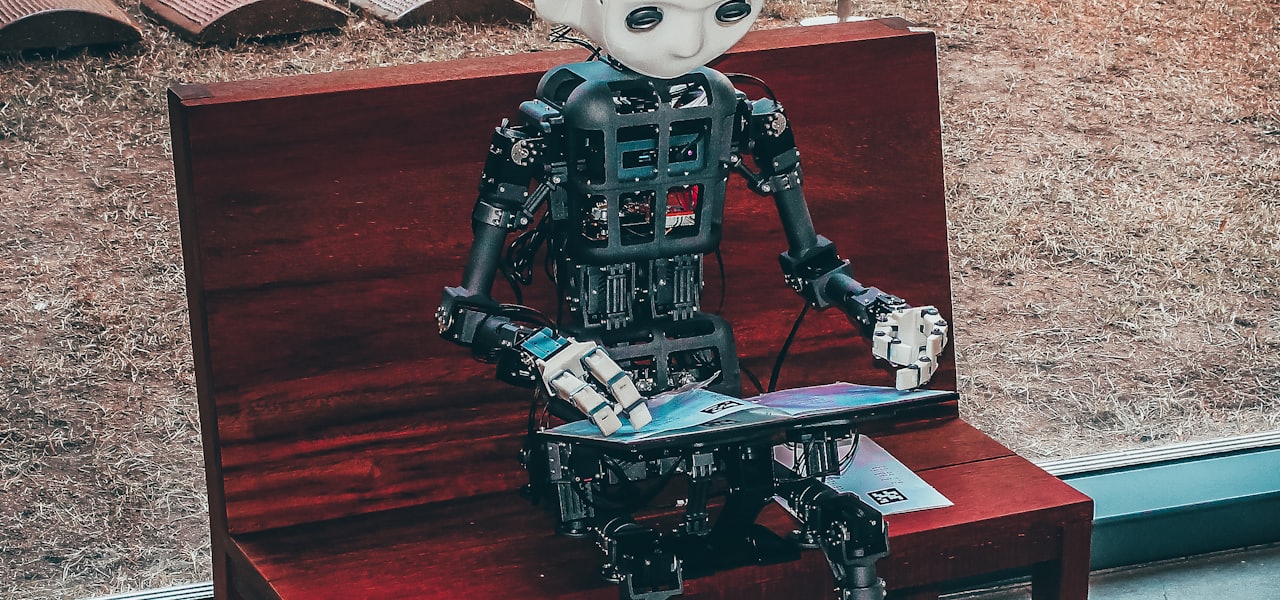
Shopping for the best AI headshot generator? An AI headshot generator is software that uses machine learning to help you get more done — it keeps getting smarter as the underlying models improve. Pricing, accuracy, and the size of the model behind the tool are the three factors that most affect daily usefulness. Whether you are a beginner or a pro, the right AI headshot generator slots into your workflow and pays for itself fast. Below we compare features, pricing, and real output so you can choose with confidence.
Instance selection
Instance selection (or dataset reduction, or dataset condensation) is an important data pre-processing step that can be applied in many machine learning (or data mining) tasks. Approaches for instance selection can be applied for reducing the original dataset to a manageable volume, leading to a reduction of the computational resources that are necessary for performing the learning process. Algorithms of instance selection can also be applied for removing noisy instances, before applying learning algorithms. This step can improve the accuracy in classification problems. Algorithm for instance selection should identify a subset of the total available data to achieve the original purpose of the data mining (or machine learning) application as if the whole data had been used. Considering this, the optimal outcome of IS would be the minimum data subset that can accomplish the same task with no performance loss, in comparison with the performance achieved when the task is performed using the whole available data. Therefore, every instance selection strategy should deal with a trade-off between the reduction rate of the dataset and the classification quality. == Instance selection algorithms == The literature provides several different algorithms for instance selection. They can be distinguished from each other according to several different criteria. Considering this, instance selection algorithms can be grouped in two main classes, according to what instances they select: algorithms that preserve the instances at the boundaries of classes and algorithms that preserve the internal instances of the classes. Within the category of algorithms that select instances at the boundaries it is possible to cite DROP3, ICF and LSBo. On the other hand, within the category of algorithms that select internal instances, it is possible to mention ENN and LSSm. In general, algorithm such as ENN and LSSm are used for removing harmful (noisy) instances from the dataset. They do not reduce the data as the algorithms that select border instances, but they remove instances at the boundaries that have a negative impact on the data mining task. They can be used by other instance selection algorithms, as a filtering step. For example, the ENN algorithm is used by DROP3 as the first step, and the LSSm algorithm is used by LSBo. There is also another group of algorithms that adopt different selection criteria. For example, the algorithms LDIS, CDIS and XLDIS select the densest instances in a given arbitrary neighborhood. The selected instances can include both, border and internal instances. The LDIS and CDIS algorithms are very simple and select subsets that are very representative of the original dataset. Besides that, since they search by the representative instances in each class separately, they are faster (in terms of time complexity and effective running time) than other algorithms, such as DROP3 and ICF. Besides that, there is a third category of algorithms that, instead of selecting actual instances of the dataset, select prototypes (that can be synthetic instances). In this category it is possible to include PSSA, PSDSP and PSSP. The three algorithms adopt the notion of spatial partition (a hyperrectangle) for identifying similar instances and extract prototypes for each set of similar instances. In general, these approaches can also be modified for selecting actual instances of the datasets. The algorithm ISDSP adopts a similar approach for selecting actual instances (instead of prototypes).
Action model learning
Action model learning (sometimes abbreviated action learning) is an area of machine learning concerned with the creation and modification of a software agent's knowledge about the effects and preconditions of the actions that can be executed within its environment. This knowledge is usually represented in a logic-based action description language and used as input for automated planners. Learning action models is important when goals change. When an agent acted for a while, it can use its accumulated knowledge about actions in the domain to make better decisions. Thus, learning action models differs from reinforcement learning. It enables reasoning about actions instead of expensive trials in the world. Action model learning is a form of inductive reasoning, where new knowledge is generated based on the agent's observations. The usual motivation for action model learning is the fact that manual specification of action models for planners is often a difficult, time-consuming, and error-prone task (especially in complex environments). == Action models == Given a training set E {\displaystyle E} consisting of examples e = ( s , a , s ′ ) {\displaystyle e=(s,a,s')} , where s , s ′ {\displaystyle s,s'} are observations of a world state from two consecutive time steps t , t ′ {\displaystyle t,t'} and a {\displaystyle a} is an action instance observed in time step t {\displaystyle t} , the goal of action model learning in general is to construct an action model ⟨ D , P ⟩ {\displaystyle \langle D,P\rangle } , where D {\displaystyle D} is a description of domain dynamics in action description formalism like STRIPS, ADL or PDDL and P {\displaystyle P} is a probability function defined over the elements of D {\displaystyle D} . However, many state of the art action learning methods assume determinism and do not induce P {\displaystyle P} . In addition to determinism, individual methods differ in how they deal with other attributes of domain (e.g. partial observability or sensoric noise). == Action learning methods == === State of the art === Recent action learning methods take various approaches and employ a wide variety of tools from different areas of artificial intelligence and computational logic. As an example of a method based on propositional logic, we can mention SLAF (Simultaneous Learning and Filtering) algorithm, which uses agent's observations to construct a long propositional formula over time and subsequently interprets it using a satisfiability (SAT) solver. Another technique, in which learning is converted into a satisfiability problem (weighted MAX-SAT in this case) and SAT solvers are used, is implemented in ARMS (Action-Relation Modeling System). Two mutually similar, fully declarative approaches to action learning were based on logic programming paradigm Answer Set Programming (ASP) and its extension, Reactive ASP. In another example, bottom-up inductive logic programming approach was employed. Several different solutions are not directly logic-based. For example, the action model learning using a perceptron algorithm or the multi level greedy search over the space of possible action models. In the older paper from 1992, the action model learning was studied as an extension of reinforcement learning. Nonetheless, further algorithms can be found that operate under different assumptions: FAMA can work even when some observations are missing, and it produces a general (lifted) planning model. It treats learning an action model like a planning problem, making sure the learned model matches the observations given. NOLAM can learn general action models even from noisy or imperfect data. LOCM focuses only on the order of actions in the data, ignoring any details about the states between those actions. The family of safe action model (SAM) learning methods create models that guarantee any plans made with them will actually work in the real world. There's also an extension called N-SAM that can learn action models with numeric conditions and effects. Additionally, numeric action models like N-SAM can be used to improve reinforcement learning (RL) performance through the RAMP algorithm. === Literature === Most action learning research papers are published in journals and conferences focused on artificial intelligence in general (e.g. Journal of Artificial Intelligence Research (JAIR), Artificial Intelligence, Applied Artificial Intelligence (AAI) or AAAI conferences). Despite mutual relevance of the topics, action model learning is usually not addressed in planning conferences like the International Conference on Automated Planning and Scheduling (ICAPS).
AI browser
An AI browser is a web browser with integrated artificial intelligence capabilities, such as automatically summarizing web page content or answering questions about it. A more specialized type is an agentic browser, based on the concept of agentic AI, which can take actions – such as navigating webpages or filling out forms – on behalf of the user. Several agentic browsers emerged in 2025, including ChatGPT Atlas (macOS only), Comet, and Dia. As of 2025, this is a recent development in the browser market, including new entrants from OpenAI, Opera and Perplexity. The designation of 'AI browser' also includes established browsers that later added non-agentic AI features, such as Microsoft Edge with the Copilot chatbot, Google Chrome with the Gemini chatbot (for Windows desktop users in the US with their language set to English), and Firefox with multiple chatbot providers (such as ChatGPT, Claude, Copilot, Gemini, and Le Chat). AI browsers have been noted to be susceptible to prompt injection attacks. == Browser extensions and integrations == Rather than creating entirely new browsers, some AI browsing solutions integrate with existing browsers through extensions or companion applications. These tools add agentic capabilities to established browsers without requiring users to switch platforms. Examples include Composite, which functions as a cross-browser agent that works with Chrome, Edge, and other browsers to automate web-based tasks for workers. == Cloud-based implementations == Cloud-based implementations of AI browsers allow users to run automated browsing agents without local installation. These systems operate on remote servers using frameworks such as Puppeteer or Playwright. Examples include Browserbase, Browser-use and AI Browser. The AI typically parses the Document Object Model (DOM) to locate and interact with page elements, and may also analyze browser screenshots to interpret layout and structure. == Criticisms and dangers == AI browsers have been noted to be susceptible to being vulnerable to prompt injection attacks, in which the content of websites can be used to hijack the control of the browser. Multiple organisations have argued against using AI browsers due to this vulnerability. The United Kingdom national cyber security centre and Gartner consider them to be too risky for adoption by most organisations. A study by the CISPA Helmholtz Center and Saarland University concluded that this vulnerability makes them easy targets for malware, fraud, automated defamation, disinformation and biased outputs.
Intelligent database
Until the 1980s, databases were viewed as computer systems that stored record-oriented and business data such as manufacturing inventories, bank records, and sales transactions. A database system was not expected to merge numeric data with text, images, or multimedia information, nor was it expected to automatically notice patterns in the data it stored. In the late 1980s the concept of an intelligent database was put forward as a system that manages information (rather than data) in a way that appears natural to users and which goes beyond simple record keeping. The term was introduced in 1989 by the book Intelligent Databases by Kamran Parsaye, Mark Chignell, Setrag Khoshafian and Harry Wong. The concept postulated three levels of intelligence for such systems: high level tools, the user interface and the database engine. The high level tools manage data quality and automatically discover relevant patterns in the data with a process called data mining. This layer often relies on the use of artificial intelligence techniques. The user interface uses hypermedia in a form that uniformly manages text, images and numeric data. The intelligent database engine supports the other two layers, often merging relational database techniques with object orientation. In the twenty-first century, intelligent databases have now become widespread, e.g. hospital databases can now call up patient histories consisting of charts, text and x-ray images just with a few mouse clicks, and many corporate databases include decision support tools based on sales pattern analysis.
Self-supervised learning
Self-supervised learning (SSL) is a paradigm in machine learning where a model is trained on a task using the data itself to generate supervisory signals, rather than relying on externally-provided labels. In the context of neural networks, self-supervised learning aims to leverage inherent structures or relationships within the input data to create meaningful training signals. SSL tasks are designed so that solving them requires capturing essential features or relationships in the data. The input data is typically augmented or transformed in a way that creates pairs of related samples, where one sample serves as the input, and the other is used to formulate the supervisory signal. This augmentation can involve introducing noise, cropping, rotation, or other transformations. Self-supervised learning more closely imitates the way humans learn to classify objects. During SSL, the model learns in two steps. First, the task is solved based on an auxiliary or pretext classification task using pseudo-labels, which help to initialize the model parameters. Next, the actual task is performed with supervised or unsupervised learning. Self-supervised learning has produced promising results in recent years, and has found practical application in fields such as audio processing, and is being used by Facebook and others for speech recognition. == Pseudo-labels == Pseudo-labels are automatically generated labels that a model assigns to unlabeled data based on its own predictions. They are widely used in self-supervised and semi-supervised learning, where ground-truth annotations are limited or unavailable. By treating predicted labels as surrogate ground truth, learning algorithms can make use of large quantities of unlabeled data in the training process. Pseudo-labeling also plays an important role in systems that must adapt to concept drift, where the statistical properties of the data change over time. In these scenarios, the model may detect that an incoming instance deviates from previously learned behavior. The system then generates a classification result for that instance, and this predicted class is used as a pseudo-label for updating or retraining model components that are becoming outdated. This approach enables continuous adaptation in dynamic environments without requiring manual annotation. In many adaptive learning pipelines, pseudo-labels are chosen when the classifier produces sufficiently confident predictions, reducing the risk of propagating errors. These pseudo-labeled instances are then incorporated into training to refresh or evolve the model's understanding of emerging data patterns, particularly when existing components show signs of “aging” due to drift or distributional shifts. This strategy reduces reliance on manual labeling while helping maintain long-term model performance. == Types == === Autoassociative self-supervised learning === Autoassociative self-supervised learning is a specific category of self-supervised learning where a neural network is trained to reproduce or reconstruct its own input data. In other words, the model is tasked with learning a representation of the data that captures its essential features or structure, allowing it to regenerate the original input. The term "autoassociative" comes from the fact that the model is essentially associating the input data with itself. This is often achieved using autoencoders, which are a type of neural network architecture used for representation learning. Autoencoders consist of an encoder network that maps the input data to a lower-dimensional representation (latent space), and a decoder network that reconstructs the input from this representation. The training process involves presenting the model with input data and requiring it to reconstruct the same data as closely as possible. The loss function used during training typically penalizes the difference between the original input and the reconstructed output (e.g. mean squared error). By minimizing this reconstruction error, the autoencoder learns a meaningful representation of the data in its latent space. === Contrastive self-supervised learning === For a binary classification task, training data can be divided into positive examples and negative examples. Positive examples are those that match the target. For example, if training a classifier to identify birds, the positive training data would include images that contain birds. Negative examples would be images that do not. Contrastive self-supervised learning uses both positive and negative examples. The loss function in contrastive learning is used to minimize the distance between positive sample pairs, while maximizing the distance between negative sample pairs. An early example uses a pair of 1-dimensional convolutional neural networks to process a pair of images and maximize their agreement. Contrastive Language-Image Pre-training (CLIP) allows joint pretraining of a text encoder and an image encoder, such that a matching image-text pair have image encoding vector and text encoding vector that span a small angle (having a large cosine similarity). InfoNCE (Noise-Contrastive Estimation) is a method to optimize two models jointly, based on Noise Contrastive Estimation (NCE). Given a set X = { x 1 , … x N } {\displaystyle X=\left\{x_{1},\ldots x_{N}\right\}} of N {\displaystyle N} random samples containing one positive sample from p ( x t + k ∣ c t ) {\displaystyle p\left(x_{t+k}\mid c_{t}\right)} and N − 1 {\displaystyle N-1} negative samples from the 'proposal' distribution p ( x t + k ) {\displaystyle p\left(x_{t+k}\right)} , it minimizes the following loss function: L N = − E X [ log f k ( x t + k , c t ) ∑ x j ∈ X f k ( x j , c t ) ] {\displaystyle {\mathcal {L}}_{\mathrm {N} }=-\mathbb {E} _{X}\left[\log {\frac {f_{k}\left(x_{t+k},c_{t}\right)}{\sum _{x_{j}\in X}f_{k}\left(x_{j},c_{t}\right)}}\right]} === Non-contrastive self-supervised learning === Non-contrastive self-supervised learning (NCSSL) uses only positive examples. Counterintuitively, NCSSL converges on a useful local minimum rather than reaching a trivial solution, with zero loss. For the example of binary classification, it would trivially learn to classify each example as positive. Effective NCSSL requires an extra predictor on the online side that does not back-propagate on the target side. === Joint-Embedding and Predictive Architectures === A major class of self-supervised learning moves beyond contrastive pairs, instead maximizing the agreement between views while preventing collapse through statistical constraints. Rooted in Deep Canonical Correlation Analysis (Deep CCA), this approach includes Joint-Embedding Architectures (JEA) like Barlow Twins and VICReg, which enforce covariance constraints to learn invariant representations without negative sampling. Deep Latent Variable Path Modelling (DLVPM) generalizes this to multimodal systems, using path models to enforce correlation and orthogonality across diverse data types. In 2022 Yann LeCun introduced Joint-Embedding Predictive Architectures (JEPA) as a step towards decision making, reasoning, and autonomous human intelligence in machines, including self-improvement through autonomous learning. Founded in representation learning, LeCun included the concept of a “world model” in JEPA which aims to enable machines to replicate human intellect by providing machines with a concept for the world in which they exist. Unlike autoencoders, JEPAs operate entirely in latent space, avoiding pixel-level noise to focus on semantic structure. Rather than just learning invariance, JEPAs learn by predicting masked latent representations from visible context. JEPA has been applied to domains such as image analysis, audio processing, and motion in images and video. == Comparison with other forms of machine learning == SSL belongs to supervised learning methods insofar as the goal is to generate a classified output from the input. At the same time, however, it does not require the explicit use of labeled input-output pairs. Instead, correlations, metadata embedded in the data, or domain knowledge present in the input are implicitly and autonomously extracted from the data. These supervisory signals, extracted from the data, can then be used for training. SSL is similar to unsupervised learning in that it does not require labels in the sample data. Unlike unsupervised learning, however, learning is not done using inherent data structures. Semi-supervised learning combines supervised and unsupervised learning, requiring only a small portion of the learning data be labeled. In transfer learning, a model designed for one task is reused on a different task. Training an autoencoder intrinsically constitutes a self-supervised process, because the output pattern needs to become an optimal reconstruction of the input pattern itself. However, in current jargon, the term 'self-supervised' often refers to tasks based on a pretext-task training setup
Anna Becker
Anna Becker is an Israeli researcher known in the field of artificial intelligence and computer science within the financial field. == Early life and education == Becker was born in Russia and immigrated to Israel at 16 after graduating from a school in Moscow. At 17, she began her studies at Technion – Israel Institute of Technology. During her master's degree in computer science, she taught first-year students of the same course, and at 27, Becker completed her PhD in Computer Science and Artificial Intelligence. == Career == While pursuing her PhD, Becker resolved an NP-complete approximation algorithm that had been unresolved for over twenty years. This made her a recognized scholar in the field. After completing her PhD, she developed an approximation technique by a factor of two. This technique is widely used today in operating systems, database systems, and VLSI chip designs. She then founded and sold Strategy Runner, a fintech software. After this, she founded EndoTech, an algorithmic trading platform based on artificial intelligence and machine learning. EndoTech's trading strategies have been operating in live cryptocurrency markets since 2017. The platform's BTC Alpha strategy has reported an average annual return of 163% on fixed capital over eight years of live operation, with a maximum drawdown of 14% and a trade accuracy rate of approximately 83%. In 2026, EndoTech entered a partnership with Bit1 Exchange to make its BTC Alpha and ETH Alpha copy trading strategies accessible to retail investors with no minimum deposit requirement, through a full-custody model in which user funds remain in their own exchange wallets at all times.As of 2023, Becker is working on Fianchetto Fund, an AI-based investing analysis platform. Becker has also co-authored a book on Bayesian networks, which has been published widely in the field of computer science and artificial intelligence.